
In today’s digital world, converting images into editable text has become more important than ever. Many people face situations where they have documents in image formats like JPG but need to extract the information quickly for editing, sharing, or storing.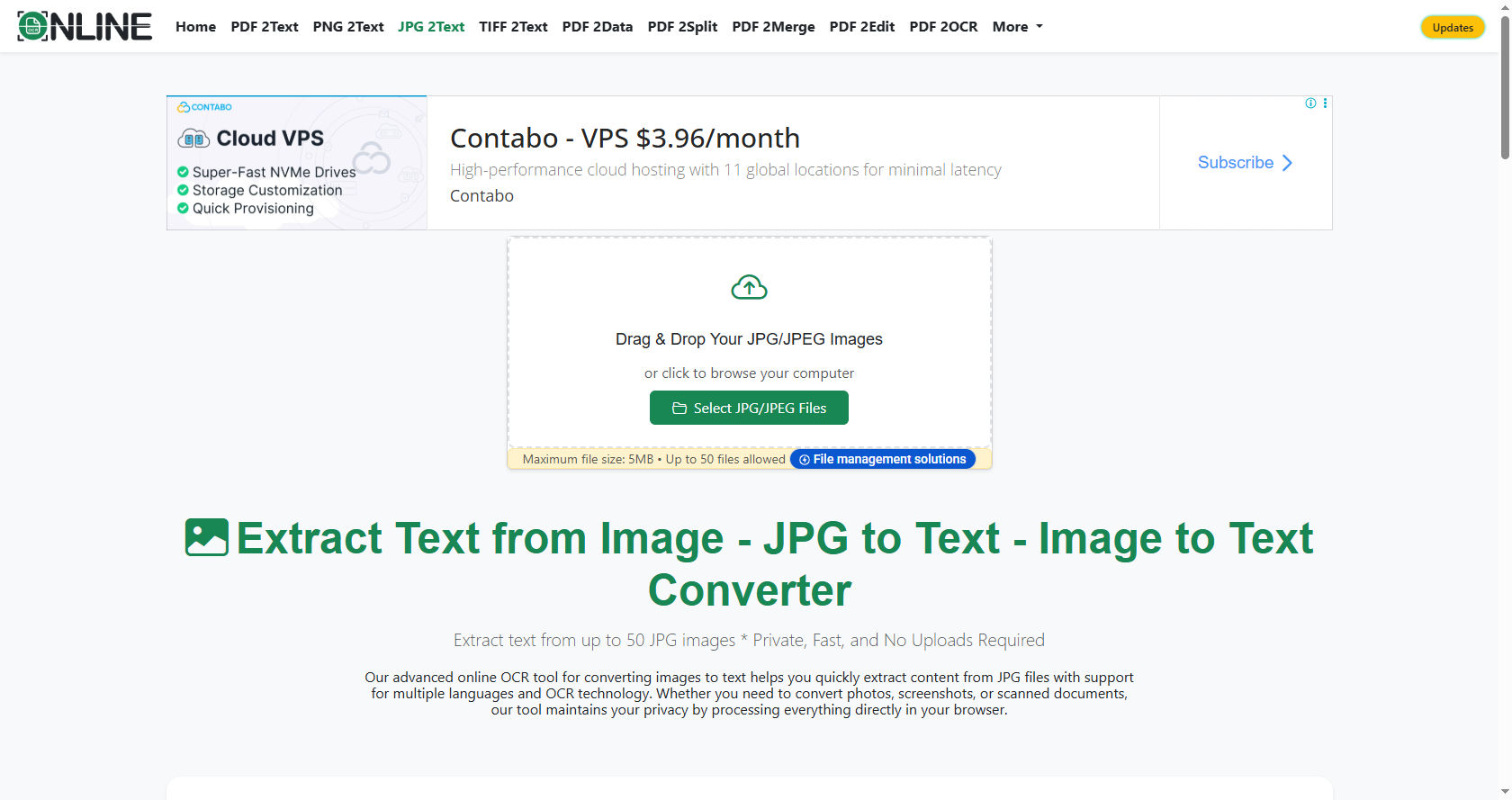
This is where the concept of JPG to Text comes in. Using a JPG to Text document scanner can save hours of manual typing, reduce errors, and make information more accessible.
Imagine taking a photo of a handwritten note, a printed report, or a contract, and instantly transforming it into a document you can edit on your computer or smartphone.
This is the primary advantage of JPG to Text scanners. It combines speed, efficiency, and convenience in one tool.
Whether you are a student, teacher, professional, or small business owner, understanding how JPG to Text technology works can help you streamline your workflow.
In this comprehensive guide, we will explore why JPG to Text scanners are essential, how they work, their key features, and how to choose the best solution for your needs.
What is JPG to Text Conversion?
JPG to Text conversion is the process of extracting textual content from images in the JPG format and turning it into editable text documents. JPG is a widely used image format for photographs, scanned documents, and screenshots. Traditionally, retrieving text from a JPG file required manual typing, which was time-consuming and prone to errors.
Today, advanced OCR (Optical Character Recognition) technology makes JPG to Text conversion fast and accurate. OCR software scans each character in the image, recognizes its shape, and converts it into digital text. The resulting document can be saved in formats like Word, PDF, or plain text, ready for editing or sharing.
This technology is particularly helpful for people who deal with large amounts of printed material, books, invoices, forms, or notes in image formats. Instead of spending hours typing, a JPG to Text scanner can complete the job in minutes.
How JPG to Text Technology Works
Understanding the working of JPG to Text scanners requires a look at OCR technology. OCR uses algorithms to analyze images and identify patterns that match letters, numbers, and symbols.
-
Image Preprocessing: Before converting the text, the software enhances the image for better recognition. This can involve adjusting brightness, contrast, and removing noise.
-
Character Recognition: The OCR engine scans each part of the image and matches patterns with a library of known characters.
-
Text Extraction: Once recognized, the characters are compiled into words and sentences, maintaining the original formatting as much as possible.
-
Output Generation: The final step is converting the extracted text into an editable document format such as DOCX, TXT, or PDF.
The entire process happens quickly, often in seconds, even for multi-page documents. Some advanced JPG to Text scanners also support handwriting recognition, although printed text is generally more accurate.
Benefits of Using a JPG to Text Scanner
Using a JPG to Text document scanner offers several advantages:
Increased Efficiency
Typing out text from images manually can take hours. A JPG to Text scanner automates this process, saving valuable time. This is especially helpful for students transcribing notes, professionals digitizing reports, or businesses processing invoices.
Error Reduction
Manual typing often leads to errors, including misspellings, formatting issues, and misplaced numbers. OCR-based JPG to Text conversion significantly reduces these errors, producing accurate and reliable results.
Easy Editing and Formatting
Once text is extracted from a JPG image, it can be easily edited. You can correct mistakes, format the document, add highlights, or merge it with other files. This flexibility is impossible with static image files.
Better Organization and Storage
Digital text files are smaller and easier to store than images. With JPG to Text conversion, you can organize your files by date, category, or keyword, making them searchable and accessible instantly.
Accessibility
Text extracted from images can be read aloud by screen readers, making it accessible for visually impaired users. This adds another layer of usefulness for both individuals and organizations.
Real-Life Applications of JPG to Text Scanners
JPG to Text scanners are not just for tech enthusiasts—they have practical applications in everyday life and professional settings.
Education
Students and teachers can benefit greatly from converting notes, textbooks, and assignments from images to text. This allows for easier editing, summarizing, and sharing.
Business and Office Work
Businesses often receive invoices, receipts, and contracts in JPG format. Converting these images to text ensures accurate record-keeping, easy editing, and faster processing.
Research and Academia
Researchers can extract text from scanned journal articles, historical documents, or handwritten notes. This simplifies literature reviews and data analysis.
Legal Documentation
Lawyers and legal professionals often need to convert scanned contracts, agreements, and forms into editable text. A JPG to Text scanner can save time and reduce the risk of human errors.
Personal Use
Even for personal use, JPG to Text conversion is handy. You can digitize recipes, letters, or old notes, ensuring they are easy to store, search, and share.
Choosing the Right JPG to Text Scanner
With many options available in the market, choosing the right JPG to Text scanner can be challenging. Here are some factors to consider:
Accuracy
The primary consideration is accuracy. A scanner should correctly recognize characters, numbers, and symbols with minimal errors. Look for software with high OCR accuracy rates.
Speed
Speed is crucial, especially for large documents. A fast JPG to Text scanner reduces waiting times and improves productivity.
Supported Formats
Ensure that the scanner supports the output format you need. Common options include DOCX, PDF, TXT, and HTML.
User-Friendly Interface
A simple and intuitive interface ensures that even beginners can use the software without complications.
Multi-Language Support
If you deal with documents in multiple languages, choose a scanner that supports those languages. Many advanced OCR tools can handle over 100 languages.
Cloud Integration
Some JPG to Text scanners offer cloud integration, allowing you to save files directly to Google Drive, Dropbox, or other cloud storage services.
Cost
While free options exist, premium software often provides higher accuracy, additional features, and faster processing. Evaluate your needs before choosing between free and paid options.
Step-by-Step Guide to Converting JPG to Text
Here’s a simple guide to convert JPG images to text using a typical document scanner:
-
Install the JPG to Text Scanner: Download and install reliable OCR software.
-
Upload the JPG File: Open the scanner and select the image you want to convert.
-
Preprocess the Image: Adjust brightness, contrast, or orientation if needed. Some scanners do this automatically.
-
Run OCR: Start the conversion process. The software will scan the image and extract the text.
-
Review and Edit: Check the extracted text for errors and make necessary corrections.
-
Save the Document: Save the text in your desired format and location.
Following these steps ensures a smooth and accurate conversion process.
Tips for Improving JPG to Text Accuracy
Even the best JPG to Text scanners may struggle with poor-quality images or complex fonts. Here are some tips to improve results:
-
High-Quality Images: Ensure the JPG image is clear, well-lit, and free from blurriness.
-
Simple Fonts: Standard printed fonts are easier for OCR software to recognize than decorative or handwritten fonts.
-
Straighten the Image: Skewed or tilted images can reduce recognition accuracy.
-
Clean Background: Remove unnecessary marks or noise from the background for better scanning.
-
Use Multi-Page OCR: For books or multi-page documents, use scanners that support batch processing.
Popular JPG to Text Tools
Several JPG to Text scanners are available, both free and paid. Some popular options include:
-
Adobe Acrobat: Offers high-accuracy OCR and supports multiple formats.
-
ABBYY FineReader: Known for its fast processing and multi-language support.
-
Google Drive OCR: Free tool with basic OCR capabilities for JPG images.
-
Microsoft OneNote: Can extract text from images and save it in editable formats.
-
Online OCR Services: Websites that allow JPG to Text conversion without software installation.
Choosing the right tool depends on your frequency of use, accuracy requirements, and budget.
Common Challenges in JPG to Text Conversion
While JPG to Text scanners are powerful, some challenges may arise:
-
Handwritten Text: Handwriting recognition is less accurate than printed text.
-
Complex Layouts: Tables, columns, and mixed images can confuse OCR software.
-
Low-Resolution Images: Blurry or pixelated images can reduce recognition accuracy.
-
Special Characters: Symbols, mathematical formulas, or unusual fonts may not be recognized correctly.
Understanding these limitations helps manage expectations and encourages proper preparation of images before conversion.
Future of JPG to Text Technology
JPG to Text conversion is evolving rapidly. With AI and machine learning integration, OCR accuracy is improving. Modern scanners can recognize handwriting, multi-language documents, and even complex layouts with high precision.
In the future, we can expect:
-
Real-time text extraction from live images and videos
-
Enhanced recognition of cursive and artistic fonts
-
Better integration with cloud storage and productivity tools
-
Smarter correction algorithms to reduce manual editing
This makes JPG to Text technology an essential tool for individuals, students, businesses, and researchers.
Conclusion
Converting JPG images to editable text documents is no longer a tedious task thanks to advanced OCR technology. The process of JPG to Text conversion saves time, reduces errors, and enhances productivity across education, business, research, and personal use.
By choosing the right JPG to Text scanner, preparing high-quality images, and following best practices, you can maximize accuracy and efficiency. The technology continues to evolve, promising even more sophisticated solutions in the future.
Whether you are digitizing old notes, processing invoices, or conducting research, JPG to Text scanners are indispensable tools that bridge the gap between static images and editable, actionable text. Adopting this technology is a smart step toward a more organized, efficient, and accessible digital workflow.
With its practicality, ease of use, and increasing accuracy, JPG to Text conversion is set to remain a vital part of modern digital life.